
Secrets in the Stone: Deep Time, Dinosaurs, and New Life at Cromhall Quarry
Contents
From Carboniferous Seas to Industrial Scars: The Geological Canvas
A Window to a Lost World: The Triassic Fossil Treasury
The site’s importance is continually reinforced by new discoveries derived from specimens collected decades ago, a testament to the painstaking work of palaeontologists and the power of new analytical techniques. Two recent identifications have fundamentally altered our understanding of reptile evolution:
Threordatoth chasmatos
Described in 2024, this small, lizard-like creature was one of the last surviving members of a group called the procolophonids.5 Resembling a modern horned lizard with bony spikes on its head,
Threordatoth possessed a highly unusual dental arrangement. Its name, derived from Old English, means “three-pointed teeth,” a reference to the unique tricuspid teeth in its jaw.11 This, combined with a flexible jaw structure where the two halves were likely connected by ligaments, suggests a highly specialised diet, perhaps for processing tough plants or insects in the harsh, high-carbon-dioxide environment of the Late Triassic.5 Another related procolophonid with similarly unusual teeth, Hwiccewyrm, has also been identified from the quarry.4
Cryptovaranoides microlanius
The most significant discovery from Cromhall to date came from a fossil originally unearthed in 1953 but only fully analysed and identified in the 2020s.4 This tiny specimen has been confirmed as the world’s oldest known modern-type lizard. This single fossil pushes back the evolutionary origins of all lizards and snakes (the group known as Squamata) by a staggering 35 million years, placing their emergence deep in the Triassic Period.15 This discovery fundamentally reshapes the evolutionary tree of modern reptiles and cements Cromhall’s status as a site of world-changing palaeontological finds.
The faunal list extends even further, including the oldest pterosaur (flying reptile) remains found in Britain, a terrestrial crocodile relative named Terrestrisuchus, and enigmatic, long-necked drepanosaurids, painting a picture of a complex and crowded reptilian community.1
| Species Name | Classification | Scientific Importance |
| Cryptovaranoides microlanius | Squamata (Lizard) | Confirmed as the world’s oldest known modern-type lizard, pushing back the origins of the group by 35 million years.15 |
| Agnosphitys cromhallensis | Dinosauria (Dinosaur) | A small, carnivorous dinosaur named after the village of Cromhall, highlighting the site’s local and scientific identity.1 |
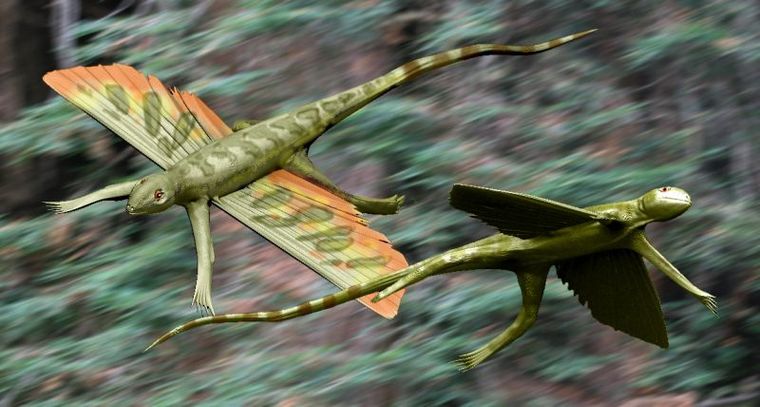
| Kuehneosaurus | Kuehneosauridae (Gliding Reptile) | A remarkable example of a Triassic gliding reptile, showcasing the diversity of reptile forms during this period.1 |
| Threordatoth chasmatos | Procolophonidae (Parareptile) | A recently discovered, late-surviving procolophonid with unique three-pointed teeth, indicating a specialised ecological niche.5 |
| Clevosaurus | Sphenodontia (Rhynchocephalian) | One of the most abundant fossil reptiles found at the site, providing rich data on this group of Tuara relatives.1 |
| Unnamed Pterosaur | Pterosauria (Flying Reptile) | Represents the oldest known pterosaur remains discovered in Britain.1 |
More Than Just Reptiles: Dinosaurs, Mammals, and Derived Sharks
While reptiles dominate the fossil record, Cromhall has also provided crucial evidence of other animal groups. The site has yielded remains of a theropod dinosaur, and most notably, a small carnivorous dinosaur was named Agnosphitys cromhallensis in honour of the village.1 Far from a terrifying predator, Agnosphitys was a diminutive creature, measuring only about two feet in length and likely feeding on insects and other small prey.1 Its presence demonstrates that even as the first dinosaurs appeared, they occupied a wide range of ecological roles, many of them far from the apex of the food chain.
The fissures also contain the tiny teeth and jaw fragments of early mammaliamorphs, or mammal relatives. These finds are part of a wider regional fossil fauna that includes landmark genera such as Morganucodon and Kuehneotherium, which are vital to understanding the transition from cynodont reptiles to true mammals.6
In a fascinating geological twist, the Triassic deposits are also seasoned with much older fossils. Researchers have identified teeth from Carboniferous sharks, some 350 million years old, mixed in with the 210-million-year-old reptile bones.2 These are “derived fossils,” weathered out of the surrounding limestone walls of the fissures by erosion and redeposited alongside the Triassic remains. This discovery serves as a geological detective story. It provides direct physical evidence of the erosion process that formed the fissures and simultaneously confirms the fully terrestrial nature of the Triassic ecosystem preserved within them, as these ancient shark teeth are the only marine fossils present.2
Taken together, the fossils of Cromhall do more than just list species. They allow for the detailed reconstruction of a complete, miniaturised island ecosystem. The diversity of forms; insect-eating dinosaurs, gliding reptiles, specialised plant-eaters like Threordatoth, and abundant sphenodontids, allows scientists to piece together food webs and understand how different species partitioned resources in a constrained environment. Furthermore, the fact that these animals thrived in a hot, high-CO₂ world provides a valuable prehistoric analogue for researchers studying how modern ecosystems might respond to anthropogenic climate change.5
Life on the Ledge and in The Lake: The Modern Wildlife of Cromhall
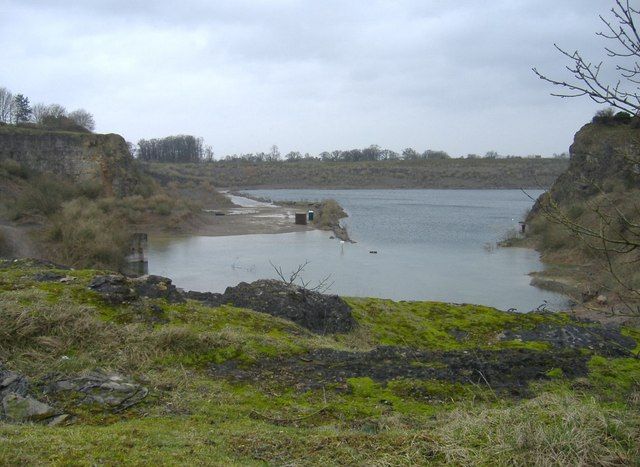
Today, the quarry is a perfect case study in ecological succession on a post-industrial site, a place where the ‘blank canvas’ left by industry has been colonised by wildlife, creating an ecosystem of significant conservation value.
The Apex Predator’s Return: Peregrine Falcons of the Quarry Face
The sheer, vertical rock faces left by decades of blasting are an inhospitable environment for most species, but for the Peregrine Falcon (Falco peregrinus), they are a fortress. Quarries across the UK have become crucial habitats for these magnificent birds of prey, providing the high, inaccessible ledges they favour for nesting.18 These artificial cliffs mimic the sea cliffs and mountain crags that are their natural nesting sites, offering superb protection from ground predators like foxes.20
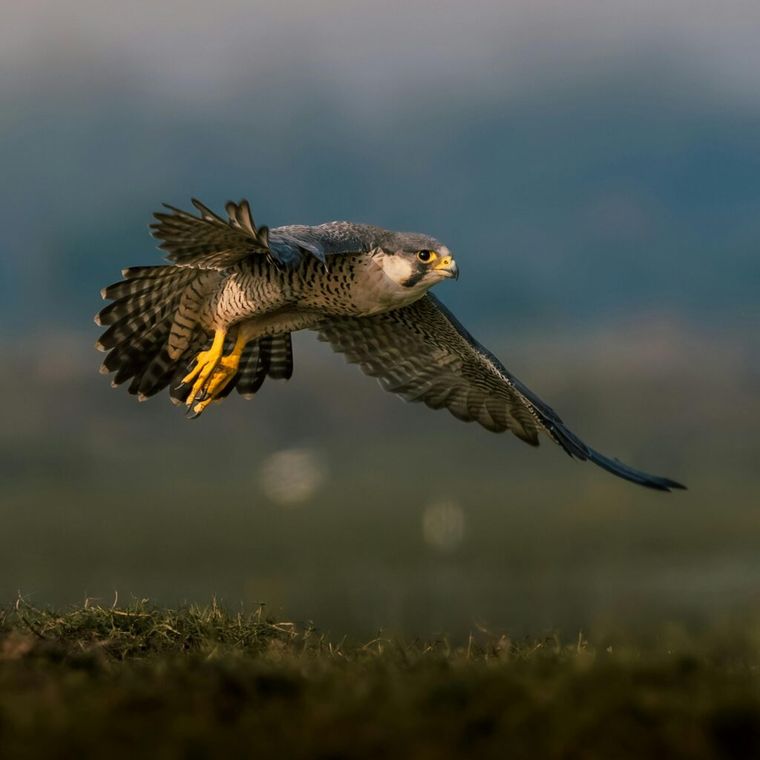
From these high vantage points, peregrines can survey the surrounding countryside, launching into their famous high-speed stoops to hunt pigeons and other medium-sized birds over the open fields surrounding the quarry.21 The combination of secure nesting sites and ample prey makes quarries like Cromhall prime real estate for these apex predators. The presence of peregrines, often accompanied by the deep, cronking calls of Ravens (Corvus corax) which also favour quarry faces, is a powerful symbol of nature’s ability to adapt and thrive in landscapes dramatically altered by human hands.18
An Amphibian Haven: The Protected Great Crested Newt
While the cliffs host avian predators, the flooded depths of the quarry provide a sanctuary for a much smaller, but no less significant, resident: the Great Crested Newt (Triturus cristatus). When quarrying operations ended in 1998, the vast pit naturally filled with groundwater, creating a deep, clear lake.4 The water, filtered through the surrounding limestone, is of exceptional quality, creating ideal conditions for aquatic life.25
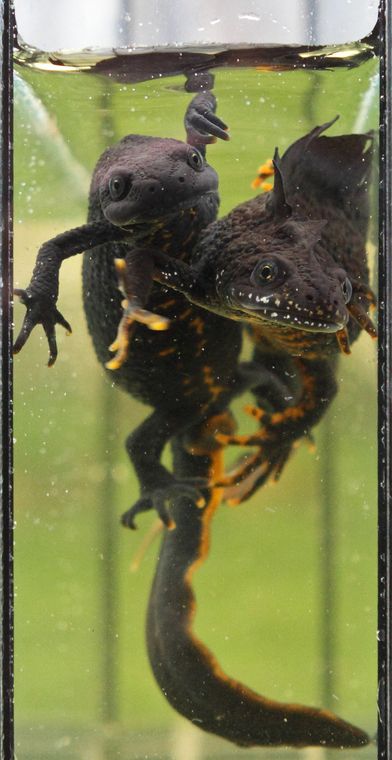
This artificial lake has become a vital habitat for the Great Crested Newt, a species given strict protection under both UK and European law.27 Its presence is so important that it forms one of the two pillars of the quarry’s designation as a Site of Special Scientific Interest (SSSI), alongside the geological treasures.4 For this amphibian, the quarry provides the perfect combination of deep, open water for foraging and terrestrial habitat around the margins for hibernation and shelter. Divers and open water swimmers at The Lake are sometimes treated to the rare sight of these striking amphibians, often called “warty newts,” moving gracefully through the underwater world.28 The thriving population at Cromhall underscores the immense, and often unexpected, conservation value that post-industrial sites can acquire.
Waterside Predators: Herons, Egrets, and Cormorants
The Lake’s clear waters and healthy ecosystem also attract a variety of fish-eating birds. Grey Herons, patient hunters of the water’s edge, have been spotted at similar quarry sites in the region.26 The striking white plumage of egrets, now an increasingly common sight in the wider area, can also be seen against the dark quarry walls.29 The deep water is a perfect hunting ground for the Cormorant, an expert diving bird that pursues its prey underwater.30 The regular presence of these piscivorous birds at The Lake is a strong indicator of a healthy fish population and adds another layer to the quarry’s rich biodiversity.
Echoes in the Woods: The Woodpeckers of Cromhall
The ecological revival of Cromhall is not confined to its cliffs and water. The land surrounding the quarry, once disturbed by industrial infrastructure, has gradually reverted to scrub and woodland, blending into a landscape that was historically part of a Royal Hunting Chase.31 This regenerating woodland provides a crucial habitat for several bird species, most notably woodpeckers.
South Gloucestershire is fortunate to host all three of Britain’s native woodpecker species.32 The most conspicuous is the Green Woodpecker (Picus viridis), whose loud, laughing “yaffle” call is a characteristic sound of the English countryside. Rather than drumming on trees, this species spends much of its time on the ground, probing lawns and parkland for its favourite food: ants.34
The Great Spotted Woodpecker (Dendrocopos major) is the classic drummer, using its powerful bill to excavate nest holes in dead trees and to extract beetle larvae from beneath the bark.35 The third, and much rarer, species is the Lesser Spotted Woodpecker (Dendrocopos minor). This sparrow-sized bird is a species of high conservation concern, and its survival depends on extensive areas of mature, deciduous woodland with plenty of standing deadwood.36
While the Green Woodpecker is often seen among the grasses close to the treeline at Cromhall Quarry, bird reports from the immediate area confirm the presence of Great Spotted Woodpeckers too.38 Crucially, the nearby Lower Woods Nature Reserve, one of the largest ancient woodlands in the region, is recognised as a key site for the elusive Lesser Spotted Woodpecker.36 This proximity suggests that the regenerating habitats around Cromhall Quarry could play a valuable role as foraging territory for these birds, demonstrating that the quarry does not exist in isolation.
A Connected Landscape: The Severn Flyway and Local Habitats
The ecological value of Cromhall Quarry is magnified by its strategic position within a wider network of habitats. The quarry lies just a few miles from the Severn Estuary, a vast wetland of international importance, designated as a Ramsar site and a Special Protection Area for its birdlife.63 This estuary is a vital migration route, a crucial ‘rest-stop’ and feeding station for tens of thousands of birds that travel from as far as Siberia, Russia, and Greenland to spend the winter in the UK’s milder climate.64
A cornerstone of this avian superhighway is the world-renowned WWT Slimbridge Wetland Centre, located just 9.5 miles from the quarry.67 Slimbridge is famous for the spectacular flocks of wintering wildfowl it attracts, including thousands of Bewick’s swans, white-fronted geese, wigeon, pintail, and numerous species of wader.68 Given that birds are highly mobile, the deep, open water of Cromhall Quarry provides an attractive satellite habitat within this busy landscape. It almost certainly serves as a valuable resting and foraging site for birds associated with the wider estuary and Slimbridge, contributing to the diversity of waterfowl that visit the quarry throughout the year.
This connection to the wider landscape is also evident in other species. Red Kites, once persecuted to near-extinction, are now a common sight, soaring over the quarry with their distinctive forked tails.38 Bats, too, find the combination of woodland, open water, and sheltered cliff faces an ideal environment for both roosting and hunting insects.
This local biodiversity has been significantly enhanced by the creation of the nearby Cromhall Wetland. This innovative project, managed by Wessex Water, uses a series of constructed ponds and marshes to naturally filter water from the local recycling centre before it enters the Tortworth Brook.40 An ecological survey of this new wetland revealed a dramatic 111% increase in biodiversity value, having attracted over 22 species of birds including two red-listed species of high conservation concern and six different species of bat in a single night.42 This neighbouring habitat acts as a rich source of wildlife that can utilise the resources of the quarry, further cementing Cromhall’s role as a cornerstone of a thriving landscape-scale ecological network.
The Human Element: A Site of Industry, Recreation, and Conservation
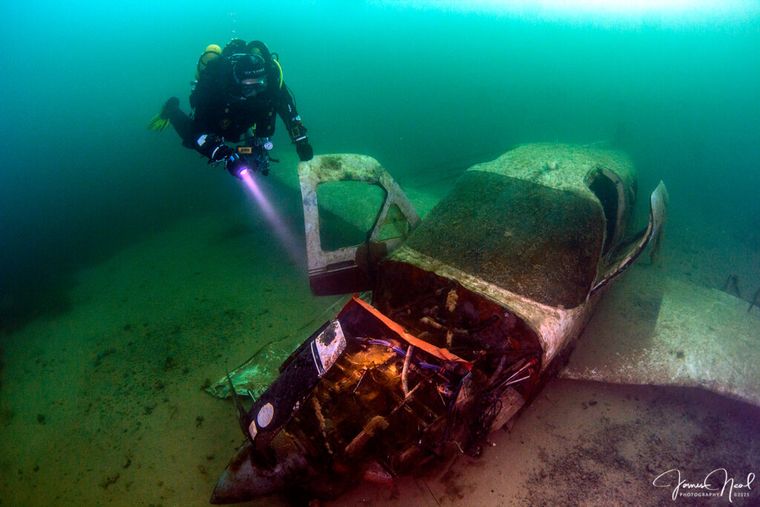
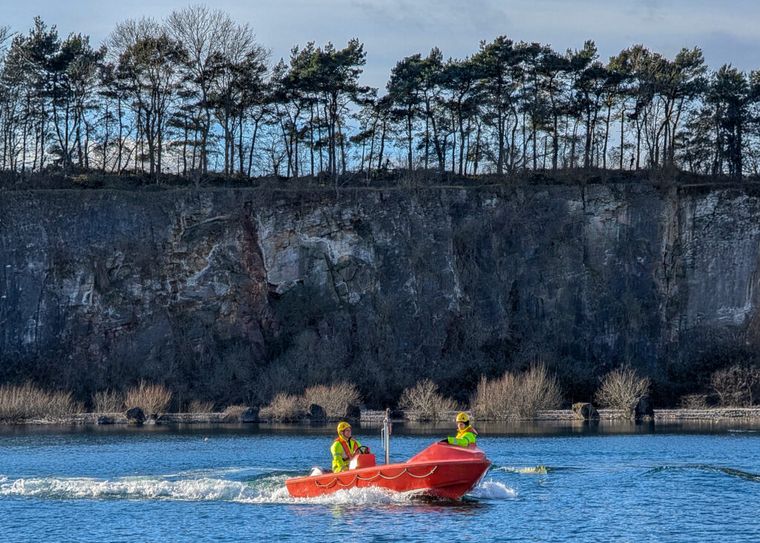
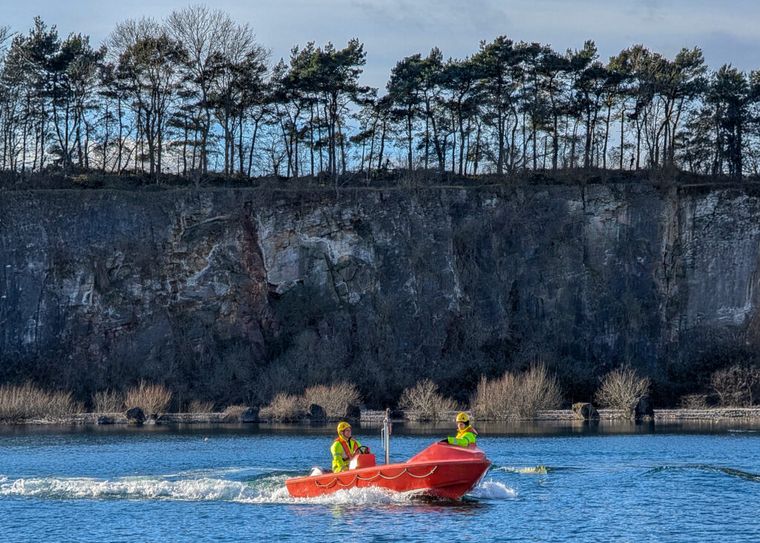
South West Maritime Academy utilises the unique environment of the quarry for a wide range of maritime safety training courses. The deep, open water is ideal for simulating sea survival scenarios, rescue boat operations, and underwater training, while the surrounding land is used for fire training and other emergency drills.4 Recognising the site’s value to the local community, SWMA also reopened the site on selected days for public recreational use on selected days and now operates as, ‘The Lake’.53 It is once again a thriving hub for open-water swimming, scuba diving, and paddleboarding, operating on a flexible pay-as-you-go basis that makes it accessible to all.25
A Delicate Balance: Managing a Site of Special Scientific Interest (SSSI)
First notified in 1966, the designation for ‘Slickstones Quarry’ (Ref: 1002898) provides national-level legal protection for its two most important features: its outstanding Triassic reptilian fossils and its significant population of Great Crested Newts.4
This designation necessitates a delicate and continuous balancing act. South West Maritime Academy facilitate commercial training and public recreation without compromising the very features that make the site scientifically and biologically precious. This stewardship is reflected in the The Lake’s operational rules. For example, divers are explicitly instructed to maintain a safe distance from the quarry walls and to avoid dislodging any rocks, a measure that directly protects the fossil-bearing geological exposures from damage or erosion.50 Similarly, safety protocols for swimmers indirectly help to minimise disturbance to wildlife.62
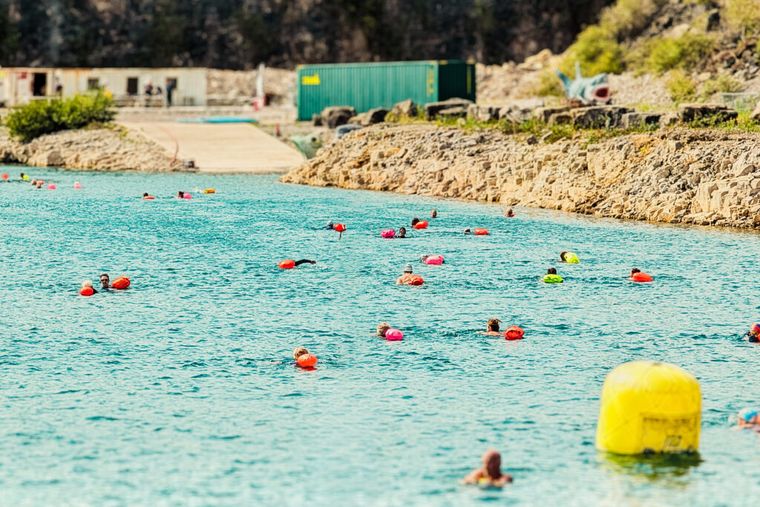
The current arrangement represents a form of symbiosis. The commercial activities of South West Maritime Academy provide the site with a constant human presence, security, and the funding required for its upkeep. This active management acts as a powerful form of stewardship, protecting the site from neglect, vandalism, or unauthorised and potentially damaging activities. In this way, the economic life of the quarry directly supports the preservation of its natural heritage, creating a functional, if complex, harmony between its competing identities.